
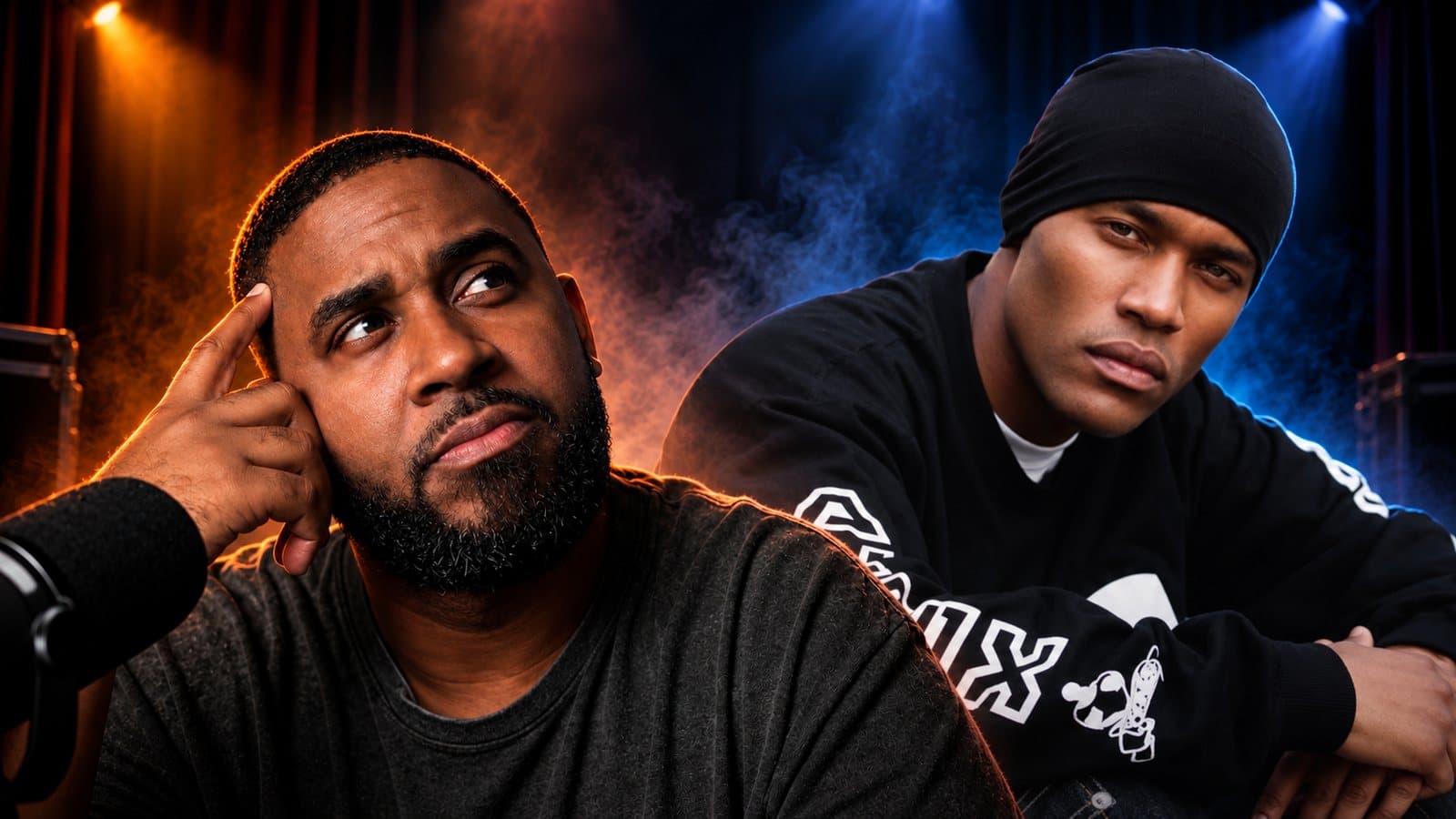

Canibus: The Complicated Legacy of a Lyricist's Lyricist
He out-rapped legends on their own records, won the pen battle with LL Cool J, and still lost the war. Here's what really happened to Canibus.
Y'all remember Canibus?
At one point, he was out-rapping legends on their own records. He was on one side of one of the most famous beefs in Hip-Hop history. And for a minute, the whole culture had him penciled in as the future of lyricism.
So how does a story like that end with controversy, a disappearing act, and one of Hip-Hop's biggest "what ifs"?
This isn't just a Canibus story. It's a lesson about the industry... and about who really gets to write the narrative.
The Entrance Nobody Could Ignore
No underground buzz campaign. No slow build. Canibus showed up on elite features and forced the culture to pay attention.
His verses were longer. More aggressive. More intellectual than almost anybody rapping at the time. On records like "Desperados," "Fantastic 4," and "4, 3, 2, 1," he wasn't trying to blend in... he was trying to separate himself.
In the late '90s, that mattered. Lyrical credibility still carried real weight. But when you make an entrance like that, the expectations come with it.
The Line That Started a War
"4, 3, 2, 1" should have been a career-defining moment for all the right reasons. Instead, it became a turning point for all the wrong ones.
Canibus's line about borrowing LL Cool J's mic tattoo was meant as homage. LL took it as disrespect. Years later, on The Joe Budden Podcast, LL admitted his ego got in the way of how he received that line. And in Hip-Hop, intention doesn't matter nearly as much as perception.
What followed wasn't a fair fight. It was a power imbalance. LL wasn't just another rapper. He was an institution.
Canibus fired back with "Second Round K.O." Technically sharp. Lyrically fearless. Unapologetic.
But here's where the lesson starts: Canibus won the pen battle. LL won the narrative war. And in Hip-Hop, narratives outlast bars.
The Album That Couldn't Win
By the time his debut album Can-I-Bus dropped in 1998, the expectations were damn near impossible. Instead of cashing in on the moment, the album exposed cracks: production that didn't fully fit his style, hooks that struggled to land, and songs that felt more instructional than emotional.
Canibus later claimed industry politics, including alleged sabotage, played a big role in how the album was handled. Whether you believe that or not, one thing is clear. Once the industry moves its energy away from you, the climb back is steep.
We've Been Asking the Wrong Question
Everybody asks whether Canibus could really rap. Wrong question. Nobody serious ever doubted the talent.
The real question is whether Hip-Hop rewards skill without feeling.
His verses were hyper-technical, concept-heavy, and packed with references. For lyric purists, that was heaven. For casual listeners, it was homework.
Hip-Hop has always been about balancing skill and emotion. Canibus leaned so hard into the skill that the feeling sometimes got left behind. It didn't make the music bad. It made it niche. And in the mainstream business of that era, niche didn't sell.
Battle Rap, the Notepad, and the Optics
As mainstream support faded, Canibus moved into the spaces that still valued pure lyricism: battle rap and the underground. Sometimes it worked. Sometimes it backfired.
The moment he pulled out a notepad mid-battle against Dizaster in 2012 became symbolic. Not of his skill, but of how unforgiving the culture gets once it decides you've fallen out of favor.
At that point, the conversation stopped being about music. It became about optics. And the optics were brutal.
The Move That Shocked Everybody
Back up to around 2001 and 2002. Canibus stepped away from music entirely and enlisted in the U.S. military.
Not for headlines. Not for a rollout. He wanted structure, identity, and distance from an industry he no longer trusted.
That decision alone tells you how heavy the pressure had become. This wasn't someone chasing fame. This was someone trying to reset his life. Even Rip the Jacker, the 2003 album many fans call his strongest, with production from Stoupe of Jedi Mind Tricks, arrived while he was serving.
So Where Is Canibus Now?
The music didn't stop. One of my Instagram followers put me on to his 2021 album Kaiju, a technical marvel that honestly sounds like a screenplay for a sci-fi thriller.
But his real footprint is the one people overlook. Canibus helped shape how rappers write. Battle rap. Underground lyricism. Complex rhyme structures. Even artists who sound nothing like him walked through doors he opened.
Success isn't always measured in sales. Sometimes it's measured in impact without credit. And Canibus has plenty of that.
His story forces three questions on the whole culture. Does Hip-Hop reward innovation or familiarity? Is being ahead of your time a blessing or a curse? And how many careers get rewritten by narrative instead of talent? That's not just a Canibus question. That's a Hip-Hop question.
So I want to hear from you. Are you a Canibus fan? And what's the last Canibus album you actually sat with?
These Are the Hip-Hop Conversations We Should Be Having.
Written by Broadway The Lyricist
Tap In
Stay Up On the Latest Conversations.
New videos, blog stories, and The Bar Lounge drops, straight from Broadway to your inbox. No spam.