
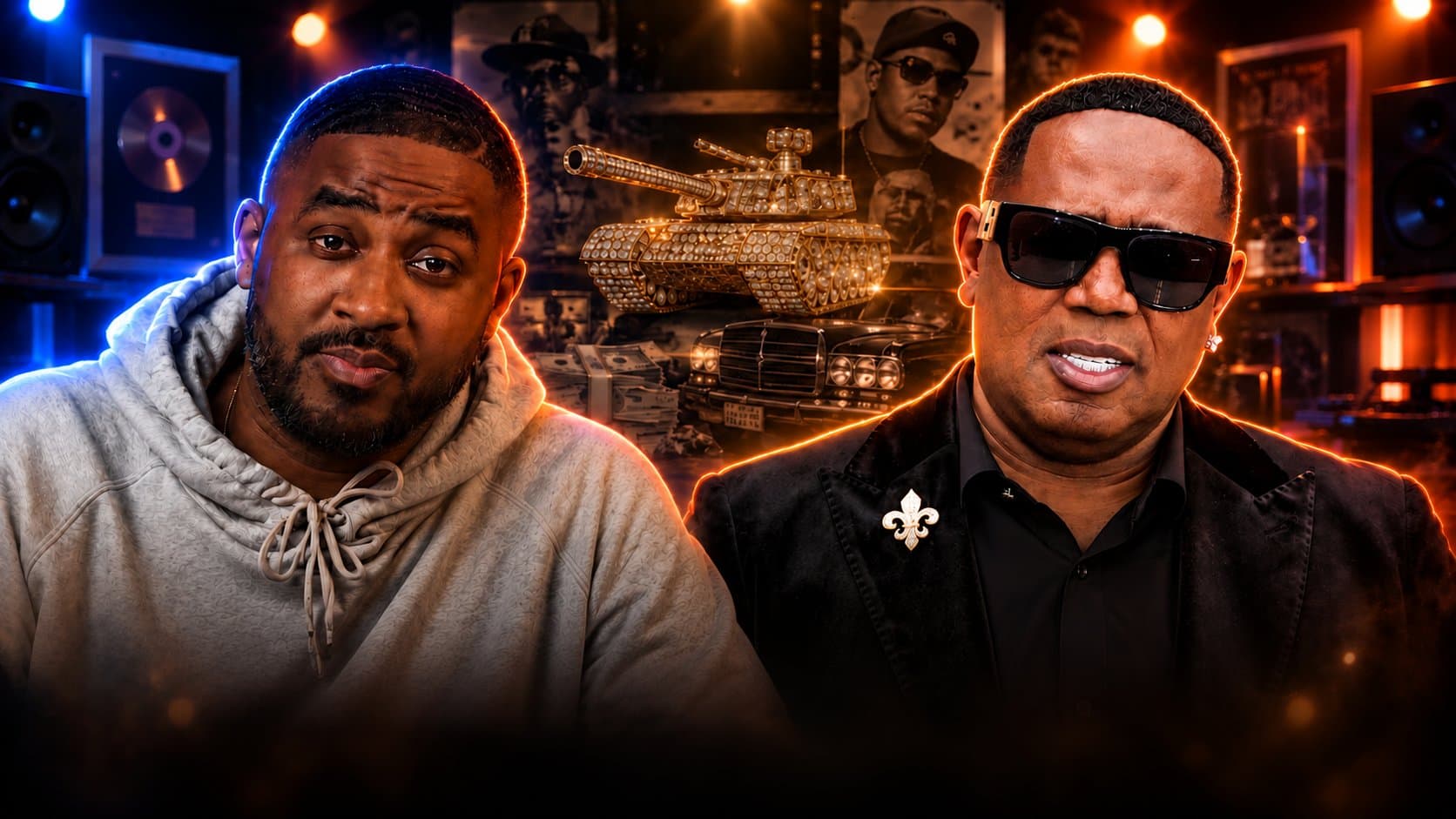

How Master P Changed the Music Business Forever
He turned down a million dollars, kept his masters, and made a major distributor work for him. But the real lesson of the No Limit deal isn't the split.
Master P made one of the most powerful record deals Hip-Hop has ever seen.
At a time when labels typically owned an artist's music and paid them a fraction of the money, he got Priority Records to distribute No Limit's albums while he kept ownership of the masters... and the overwhelming majority of the profits.
That deal helped lay the blueprint for Cash Money, for modern label partnerships, and for the ownership conversation artists are still having today.
But here's what everybody misses: Master P couldn't demand that deal until he built something the industry couldn't ignore.
How a Traditional Record Deal Worked
To understand what Master P pulled off, you have to understand the deal most artists were signing.
The label gave the artist an advance to record an album. But that advance wasn't a gift. The label could recoup it, along with recording costs and other approved expenses, out of the artist's royalties. And after all of that, the label usually owned the master recordings.
The artist created the music. The artist's name sold the music. But the label owned the asset.
Because the artist was paid from a small royalty percentage, an album could make real money before that artist ever saw another check.
Master P understood something most artists didn't: the person asking for the opportunity usually has the least power in the negotiation. So instead of asking a major label to build No Limit Records, he built it himself.
It Started in a Record Store
Before No Limit became an empire, it was a record store in Richmond, California.
That store gave Master P something more valuable than industry approval. Information.
He could see what people were buying. He could talk directly to customers. He could study which album covers grabbed attention, which artists had loyal audiences, and which regions supported independent music. He wasn't sitting in an office trying to predict what people wanted. He was standing inside the marketplace watching them buy it.
Then he used that information to build a company. He sold music independently, moved through different cities and regions, built relationships with local distributors and stores, promoted his own releases, and developed his own audience. Most importantly, he kept reinvesting the money.
So when the major labels finally came calling, they weren't looking at an artist with a demo and a dream. They were looking at a functioning business.
Why He Turned Down a Million Dollars
Master P has said Jimmy Iovine offered him a million-dollar deal. For most artists, that's the finish line.
But P understood what came with the money. Taking it meant entering a traditional artist agreement and potentially giving up the rights, ownership, and control he was building No Limit around. So he said no.
That sounds crazy until you understand the difference between money and leverage. The million dollars could have made Master P a well-paid artist. Ownership gave him the chance to become a powerful executive.
By the mid-1990s, No Limit had proven it could make records, package them, market them, and sell them. What it lacked was national infrastructure. That's where Priority Records came in.
The Priority Records Deal: 80/20 or 85/15?
Priority already knew how to distribute independent Hip-Hop. But Master P wasn't asking Priority to tell him what music to make. He didn't need them to create the No Limit image or find his audience. No Limit delivered the product. Priority helped press it, distribute it, and get it into stores across the country.
That's a completely different relationship. Master P wasn't negotiating as one rapper asking a label for a chance. He was negotiating as the owner of one company doing business with another company.
The exact split has been reported differently over the years. Some accounts say 80/20. Master P has described it as 85/15. But that five percent isn't the important part.
No Limit reportedly kept the overwhelming majority of the economics and kept ownership of its masters. Priority got paid for providing infrastructure. Master P kept control of the asset. And because No Limit owned its masters, every album wasn't just a one-time payday. It became part of a catalog that could keep generating money.
The Machine Behind the Masters
Owning the masters was only half of the equation. Master P still had to build a system that made those masters valuable.
The tank logo made every album instantly recognizable. The Pen & Pixel artwork made the CDs look larger than life. The album booklets advertised upcoming releases from other No Limit artists, so one purchase introduced the customer to five more.
Artists appeared on each other's songs. Producers worked across the whole roster. Marketing one album helped market the entire company. And No Limit released music at a pace traditional labels rarely attempted.
Volume, branding, and cross-promotion became the advantage. Master P didn't just own his music. He built an operation capable of making that ownership pay.
Cash Money Was Watching
The clearest proof of No Limit's impact came from another New Orleans company.
In 1998, Cash Money Records reached its own historic agreement with Universal. Like No Limit, Cash Money had already built regional demand before approaching a major. The reported deal let Cash Money keep its masters while taking the overwhelming majority of the profits from record sales.
No Limit proved an independent Southern Hip-Hop company could walk into the building with leverage. Cash Money proved No Limit wasn't a fluke.
How Record Deals Changed (and How the Industry Adapted)
After No Limit, artists and independent labels paid closer attention to master ownership. Distribution became an alternative to the traditional record deal. Licensing your music became something different from permanently surrendering it. Joint ventures, profit-sharing agreements, and label-services deals gave artists more ways to reach major infrastructure while keeping some control.
But the story doesn't end with the artists winning, because the industry adapted too.
As physical album sales declined, record companies started looking beyond record sales for revenue, which helped spread the 360 deal. Now a company could take a piece of touring, merchandise, endorsements, publishing, and more.
The language changed, too. More agreements started getting called "partnerships." But putting the word partnership in a contract doesn't make the relationship equal. If one side controls the money, the masters, the accounting, and the final decisions, the new language may just be covering the same old power.
Who Actually Owned the Music?
That raises an uncomfortable question about the No Limit story itself.
No Limit owning its masters doesn't necessarily mean every artist signed to No Limit owned the masters they recorded. Master P escaped the traditional artist position by becoming the label. That put him on the ownership side of the table. And there's a big difference between an artist owning the company and every artist working for that company owning their music.
That doesn't erase what Master P accomplished. It makes the lesson more honest.
Ownership Protects the Value. Leverage Sets the Terms.
Everybody can't walk into a major label today and demand Master P's deal. He didn't get it just because he understood ownership. He got it because No Limit had sales, customers, products, and a system that already worked.
That's the part today's independent artists sometimes miss. Owning your masters matters. But ownership without an audience, a marketing plan, or a functioning business can mean owning 100% of something that generates almost nothing.
Master P had ownership and leverage. The ownership protected the value. The leverage created the terms.
So did Master P change record contracts by himself? No. Independent distribution existed before No Limit, and the modern music business changed for plenty of reasons, digital distribution and streaming included.
But Master P changed what an entire generation of Hip-Hop artists believed they could become. Not just the talent. Not just the person cashing the advance. The owner. The supplier. The company sitting across the table.
His greatest lesson wasn't that every artist should reject a record label. It was that you should build enough value that signing becomes a choice, not your only chance to survive. And that lesson goes way beyond music. It applies to anything we build around our own work.
So I want to hear from you. Did Master P change the record deal forever... or did he just understand leverage better than everybody else?
These Are the Hip-Hop Conversations We Should Be Having.
Written by Broadway The Lyricist
Tap In
Stay Up On the Latest Conversations.
New videos, blog stories, and The Bar Lounge drops, straight from Broadway to your inbox. No spam.